

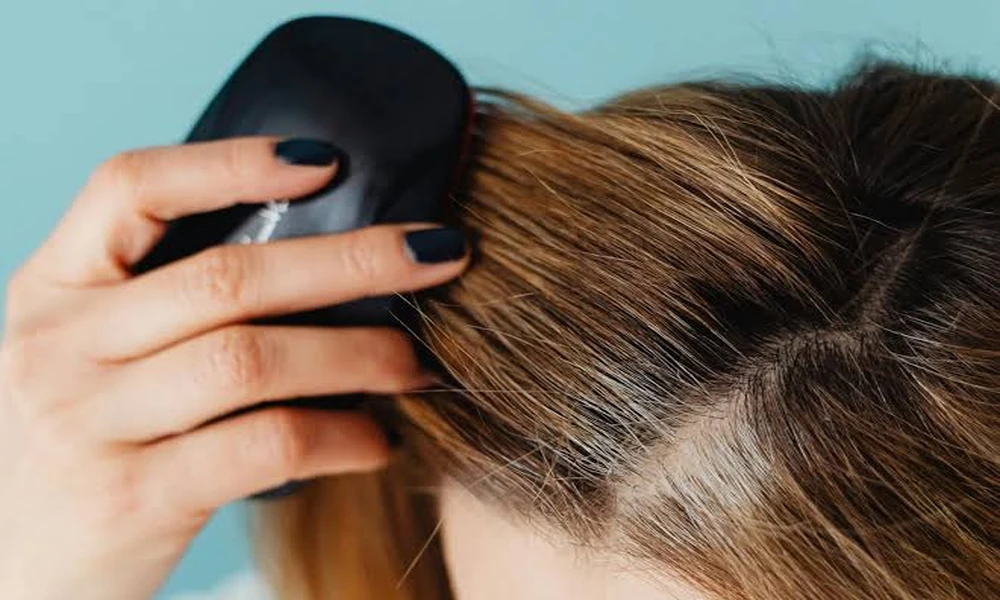
Healthy hair starts at the root. And it’s at the scalp that the story is made or starts to fall apart. Dead skin cells, excess sebum, leftover dry shampoo and product residue build up against the follicle directly and interfere with growth over weeks. Regular scalp exfoliation breaks this cycle. It clears the debris, wakes up circulation, and gives the follicle the breathing room it needs to function well.
Why Scalp Exfoliation Earns Its Place in a Routine
Skin cells on the scalp regenerate continuously. Hair traps those shed cells rather than letting them fall away. So they accumulate alongside oils and product residue into a layer sitting directly against the follicle. Inflammation, flakiness, and sluggish growth often follow.
Exfoliation dissolves and lifts this buildup. Once the surface is clear, serums and treatments applied afterwards actually reach where they need to go. MCaffeine has built a range of caffeine-infused scalp scrubs around this principle. Caffeine absorbed topically supports follicular circulation, which is why it has become one of the more credible active ingredients in scalp-focused formulations.
Physical vs. Chemical Exfoliation: A Quick Comparison
| Type | Method | Best For | Frequency |
|---|---|---|---|
| Physical | Scrub, brush, or massaging tool | Oily scalp, heavy buildup | Once a week |
| Chemical | AHAs, BHAs, salicylic acid | Flaky, sensitive scalps | Once every 10 days |
| Hybrid | Formula combining both types | Normal scalp maintenance | Once a week |
Physical exfoliation moves buildup through friction. Chemical exfoliation breaks the bonds between dead cells at a molecular level, which suits scalps that react to scrubbing. Your call between the two comes down to how your scalp behaves between washes.
Incorporating Exfoliation Into Your Wash Day
Start on a damp scalp before shampoo goes on. Work the exfoliant in with fingertips in small circular movements, giving extra attention to the crown and temples where oil gathers fastest. Rinse well, then continue with shampoo and conditioner as normal.
Mamaearth draws on Indian herbal ingredients like onion extract and bhringraj, combining them with modern scalp formulation. Their range rinses cleanly and leaves nothing behind, and the difference tends to show up in how the scalp feels afterward.
Right after rinsing is also the best window for a scalp serum. The follicle is clear and receptive, and a lightweight oil or peptide serum pressed in gently at this point will absorb more effectively than at any other stage.
To Wrap Up
Scalp health is the starting point for everything hair-related, and exfoliation is one of the most direct ways to support it. Mcaffine and Mamaearth are good starting points for this. AJIO carries over 5,000 hair care products, with free returns on eligible orders.
FAQs
1. Is scalp exfoliation safe for colour-treated hair?
Yes. Space sessions to once every two weeks and use a gentler formula to avoid stripping colour or accelerating fade.
2. Do caffeine-based scalp scrubs need to be used on damp hair?
Yes, damp is ideal. Moisture softens buildup and lets the granules move freely without any risk of micro-abrasion on dry skin.
3. When do results usually start showing?
Usually, you can expect less flakiness and a cleaner feeling scalp in two to three weeks of consistent weekly use.
4. How is scalp scrub different from anti-dandruff shampoo?
A scrub removes physical buildup through manual action. Anti-dandruff shampoos target the fungal cause of flaking with antifungal actives. The two address different things and work well alongside each other.
5. What should someone with a reactive scalp look for in a formula?
Smaller granule sizes and calming botanicals like aloe or centella are a good place to start. Beginning with once a fortnight and building from there tends to work better than jumping straight into weekly sessions.